

An overseas licence sets rules outside the UKGC system and does not, by itself, authorise gambling for customers in Great Britain.
What a Non-UK Casino Licence Actually Means
A non-UK-regulated casino is an online gambling site that operates without oversight from the UK Gambling Commission (UKGC). It may still describe itself as licensed, but that wording does not mean it holds a UK casino licence. The licence may have been issued by a regulator elsewhere, under that jurisdiction’s rules.
The distinction is between having a licence and being authorised to serve customers in Great Britain. These are not interchangeable claims. A licence from another jurisdiction identifies a regulatory framework outside the UKGC system; it does not, by itself, give an operator permission to offer gambling to people in Great Britain.
For operators serving customers in Great Britain, the relevant permission is a licence from the UKGC. That requirement applies regardless of where the operator is based. A company’s overseas address, or the location of the regulator that issued its other licence, does not change the requirement.
What the word “licensed” tells you
When a casino calls itself licensed, the word is incomplete unless you know which authority issued the licence. A site may hold an online gambling licence from a jurisdiction such as Malta, Curaçao, Gibraltar or Anjouan. That establishes a connection to an overseas licensing system, not UKGC oversight.
When considering a casino operating outside the UK licensing framework, payout timing is one practical detail to check. Use the information below as a limited reference: it covers payout speed only.
1. BeOnBet
Payout speed: 1-3 business days BeOnBet lists a payout speed of 1–3 business days, giving you a stated timeframe to consider.
2. WinBeast
Payout speed: 1-3 business days WinBeast lists payouts as taking 1–3 business days. This gives you a stated timeframe, but no other details are available here.
3. SpinFormula
Payout speed: 1-3 business days SpinFormula’s listed payout speed is 1–3 business days, a useful timing detail for you to note.
4. SlotoSport
Payout speed: 1-3 business days SlotoSport lists a payout speed of 1–3 business days. That is the only operator detail available here.
5. Chanze
Payout speed: 1-3 business days Chanze states a payout speed of 1–3 business days, offering you a clear timing reference.
6. NightWin
Payout speed: 1-3 business days NightWin lists payouts as taking 1–3 business days. No further specifics are provided.
7. Britsino
Payout speed: 1-3 business days Britsino’s listed payout speed is 1–3 business days, which gives you a stated timeframe to keep in mind.
8. Zombillion
Payout speed: 1-3 business days Zombillion lists a payout speed of 1–3 business days. This is the only specific information available for you to assess.
9. Revery Play
Payout speed: 1-3 business days Revery Play states a payout speed of 1–3 business days, giving you one concrete point of reference.
10. Dieselwin
Payout speed: 1-3 business days Dieselwin lists payouts as taking 1–3 business days. No additional operator details are available here.
This is why “licensed online casino” is not enough information on its own for a reader in Great Britain. The useful distinction is whether the operator holds the UKGC licence required to serve the British market. A foreign licence and a UKGC licence are separate credentials, issued under separate systems; one should not be read as a substitute for the other.
The same applies when a company refers to its casino as “regulated” or presents a licence badge. Those descriptions may refer to its status in another jurisdiction. They do not answer whether the operator is authorised to provide gambling services in Great Britain. The wording can sound reassuring while leaving the central point unresolved.
A licence is not a universal passport
Licensing does not work as a single international permission that follows a casino wherever it operates. An authority’s licence relates to its own regulatory framework. A casino may therefore be licensed somewhere and still not have the UKGC authorisation required for serving customers in Great Britain.
That difference matters even when the site is accessible online. Being able to open a website, create an account or see an overseas licence claim does not establish that the operator has the permission required for the British market. Access and regulatory authorisation are different questions.
“Non-UK-regulated” is consequently a description of the operator’s relationship with UK regulation, not a claim that it has no licence anywhere. Many such sites point to an overseas licence. The defining feature here is that they operate without UKGC oversight.
Non-UK-Regulated Casinos: Rules and Risks
How to read the claim
If a casino says it has an online casino licence, identify the regulator named in the claim before drawing a conclusion. If the named authority is outside the UK, treat that as an overseas licence, not as a UK casino licence. The operator’s base of operations does not alter this distinction: companies serving customers in Great Britain require the UKGC licence regardless of where they are based.
This also clarifies why phrases such as “new licensed online casino” can be ambiguous. “New” describes the site or its launch; “licensed” still needs a regulator attached to it. Neither the launch date nor the bare presence of a licence claim establishes UKGC authorisation.
For a reader, the practical starting point is therefore not whether a casino uses the word “licensed”, but what that licence represents. An overseas licence may show that an operator is subject to a non-UK framework. It does not mean the site is a licensed online casino for the British market. In Great Britain, that market-specific permission comes from the UKGC.
How Malta and Other Overseas Licensing Systems Differ
An online casino may hold a licence from a regulator outside the United Kingdom. Malta, Curaçao, Gibraltar and Anjouan are among the jurisdictions that issue licences to gambling operators. A licence from one of these places identifies an overseas regulatory relationship; it does not, by itself, establish that the operator is overseen by the UK Gambling Commission.
Malta
An overseas licensing system that provides a regulatory framework separate from the UKGC.
Curaçao
An offshore jurisdiction issuing licenses that do not establish permission to serve Great Britain.
Gibraltar
An overseas regulator whose licensing does not substitute for a UK Gambling Commission licence.
Anjouan
A foreign licensing authority that does not authorize a casino to operate in the United Kingdom.
The distinction matters because a licence is not a universal passport. Each authority’s permission belongs to its own regulatory system. An operator licensed in Malta, for instance, has an overseas licence, not a UK Gambling Commission licence. The same is true of casinos licensed in Curaçao, Gibraltar or Anjouan. The location of the regulator and the scope of its permission should not be confused with permission to serve customers in Great Britain.
For operators serving Great Britain, the relevant requirement is a UK Gambling Commission licence, regardless of where the business is based. That means an overseas licence does not replace the British one. A company can be based abroad and still need UKGC authorisation if it serves the British market; conversely, having a foreign licence alone does not put it under UKGC oversight.
These jurisdictions should not be treated as interchangeable labels, either. Malta, Curaçao, Gibraltar and Anjouan are separate licensing systems, with their own authorities and rules. The fact that a casino is described as “licensed” tells you that a regulator has granted some form of permission, but the word alone does not explain what the licence covers or which market it allows the operator to serve. The issuing jurisdiction is therefore part of the meaning of the claim, not a detail to skim past.
That distinction can be easy to miss in casino advertising. A prominent reference to a Malta licence, for example, may sound reassuring to a British reader, but it still describes an overseas licence. It does not mean that the casino has UKGC approval. Nor does a list of several foreign licences change the point: none of those references is a substitute for the specific licence required to serve Great Britain.
Non-Gamban Casinos UK: What Access Really Means
The same applies when an operator uses “international” or “offshore” language. Those terms do not identify a regulator or establish a licence’s scope. The useful question is not simply whether a casino displays a licence claim, but which authority issued it and what that means for the market in question. That is a matter of understanding the claim; checking its accuracy is a separate step.
For readers comparing Malta-licensed online casinos with other non-UK-regulated casinos, the jurisdiction name is a starting point, not a verdict on suitability. It indicates where the operator’s stated licensing relationship sits. It does not, on its own, show that the casino is authorised to serve Great Britain, or make the operator subject to the same regulator as a UKGC-licensed site.
In practical terms, keep two ideas separate: an overseas authority may license a casino, and the UK Gambling Commission regulates operators that serve customers in Great Britain. One does not imply the other. A casino’s country of incorporation, the place named on its licence, and the market it serves can all be different. Treating those as one thing is how an overseas licence gets mistaken for British oversight.
What to Check Before Trusting a Casino’s Licence
A licence badge on a casino’s website is a claim, not proof. Before relying on it, check whether the stated regulator recognises the operator, whether the licence is current and whether the legal company named in the licence matches the company running the site. A polished badge or a page describing the casino as “licensed” does not answer those questions.
Verify a Licence
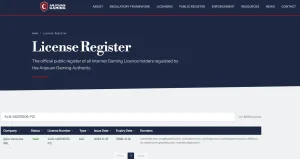
Search the public register
Look for the operator or licence holder on the regulator’s own official public register rather than relying on a website badge.
Compare legal entities
Match the company name in the register entry with the legal entity listed in the casino’s terms and conditions.
Check the expiry date
Verify that the licence is current by comparing the date on the document with the regulator’s register.
Review the permitted scope
Confirm that the licence actually permits the operator to serve your specific market and is not restricted.
Start with the regulator’s own public register. Search for the operator or licence holder there rather than relying only on a certificate displayed by the casino. For an Anjouan casino licence, look for the entry in the Anjouan authority’s public register. If you cannot find a matching entry, treat the claim as unverified; a screenshot or copied certificate cannot substitute for confirmation from the authority.
Read the register entry carefully. Compare the company name shown there with the legal entity named in the casino’s terms and conditions. A similar brand name is not necessarily a match: a casino may use one name with customers while a different company appears in its legal documents. If the entities do not match, or the site does not identify its operating company clearly, you cannot establish from the licence claim alone which business is responsible.
Check the licence’s expiry date as well. An old certificate may show that a licence was granted at some point, but it does not establish that the permission remains current. Compare the date on the document with the regulator’s register, and check that the public entry has not expired. If the register and the casino’s own material disagree, do not assume the casino’s version is correct.
Also read what the licence permits. An Anjouan licence does not authorise a casino to operate in the United Kingdom or in other markets listed as restricted. So even a genuine, current entry does not establish that the casino is authorised to serve customers in every country. The licence’s existence and its permitted scope are separate questions.
Casinos Without a UK Licence: Rules and Risks
The same basic approach applies when a casino names another overseas regulator: look for confirmation from that regulator, identify the legal company behind the site and check the permission’s current status and scope. Do not treat a logo, a customer-service reply or a search result as equivalent to an official register entry. If the regulator’s public information is unclear, that uncertainty is relevant to your decision; it is not a detail the casino’s marketing can resolve.
Keep copies of the relevant terms and licence information when you check them. The operator’s documents may change, and a later dispute can turn on which company set the terms you accepted. This does not make a weak or mismatched licence claim stronger, but it helps you record what the site represented at the time.
Finally, separate “licensed” from “best”. A licence check can help establish who claims to regulate a casino and whether the claim is supported by a current public record. It cannot, by itself, establish that the casino is suitable for you, that its terms are favourable or that a foreign licence gives you UK regulatory protection. A site may hold a genuine overseas licence while still lacking permission to operate in the United Kingdom.
UK-Licensed Casinos and the Protections You Give Up
A casino’s licence affects more than the wording on its website. It determines which regulator oversees the operator and which routes may be available if something goes wrong. A UK-licensed casino is overseen by the UK Gambling Commission (UKGC); a non-UK-regulated casino operates without that oversight. An overseas licence does not provide the same protections as a UK licence.
Players at non-UK-regulated casinos lose access to the UK’s Financial Ombudsman Service and the UKGC’s complaints procedure for dispute resolution.
For you, one important difference is access to support when a dispute cannot be resolved directly with the operator. Players at non-UK-regulated casinos cannot use the UK’s Financial Ombudsman Service for a dispute with the casino, and they do not have access to the UKGC’s complaints procedure against that operator. The UKGC cannot step in as the regulator of a casino it does not license. If the operator changes its terms, disputes a withdrawal or handles a complaint poorly, your options are therefore more limited.
Responsible-gambling protections are another distinction. UK-licensed operators must provide the tools required under the British system. Non-UK-regulated sites do not offer equivalent mandatory safeguards, such as deposit limits or self-exclusion schemes. Casinos not on GamStop are outside the UKGC’s self-exclusion scheme, so registering with GamStop does not block access to them. That matters if you rely on an external block rather than the casino’s own settings to help control your gambling.
This is not simply a question of whether a site has a licence somewhere. Online casinos licensed in Curaçao or Anjouan, for instance, are not thereby UK-licensed casinos. Their own regulator may set requirements, but those requirements do not give you UKGC oversight or access to UK complaint routes. A licence label and a familiar payment option cannot replace those protections.
Non-GamStop Curaçao Casino Sites: Licensing Explained
A licensed online casino site serving customers in Great Britain must hold the relevant UKGC licence, wherever the operator is based. That local licence is the basis for the safeguards that apply in the British market. By contrast, a non-UK-regulated casino may present its own responsible-gambling information or customer-support process, but those arrangements are not a substitute for mandatory UK protections or an independent UK route for redress.
If you are comparing sites, consider what happens after a problem, not only what appears at sign-up. Check whether the operator is covered by the UKGC and whether you would have access to the safeguards and complaint channels you expect. With a non-UK-regulated site, do not assume that a dispute can be escalated to a British regulator, or that self-exclusion through GamStop will prevent you from opening or using an account there. The protection you give up is practical: fewer external checks and fewer established routes to challenge the operator.
Non-UK Casinos: Legal Position and Practical Access
The legal position is easier to understand when you separate the operator’s obligations from your own. A casino’s overseas licence may permit it to offer gambling under the rules of the issuing jurisdiction. It does not, by itself, give the operator permission to serve customers in Great Britain. Operators supplying gambling services to the British market are required to hold the relevant UK licence, wherever the business is based.
That requirement is directed at the business, not at an individual player. The Gambling Act 2005 targets operators that provide gambling services into the UK market; it does not make a player’s use of an unlicensed site a criminal offence. Nor does UK law expressly forbid British citizens from using gambling services licensed in another country. Those points are not the same as saying that every non-UK licensed casino is authorised to accept customers in Britain. An Anjouan casino licence, for instance, is not permission to operate in the UK.
While the Gambling Act 2005 targets operators providing unlicensed services into the UK, it does not make a player’s use of such a site a criminal offence.
Access is not the same as authorisation
A non-UK licensed casino may be reachable from Britain, and a person may be able to register or try to make a deposit. That practical access does not establish that the operator is entitled to serve the British market, or that the service is legally authorised here. A website’s own terms may also restrict where it accepts customers. Availability on a screen is not a ruling on the operator’s obligations.
This distinction matters when you encounter claims that a casino is “legal for UK players” because it holds a foreign licence. The licence and the market being served are separate questions. A regulator overseas may oversee the operator under its own system, but that does not replace the UK permission required for an operator supplying gambling services in Great Britain. Equally, the absence of that UK permission does not turn the player into the party targeted by the operator-licensing rule.
What you remain responsible for
The fact that players do not commit a criminal offence simply by gambling on an unlicensed site should not be mistaken for a general endorsement or a guarantee of suitability. You are responsible for checking the laws that apply to you and for understanding the implications of using a gambling service based outside the UK. Where your circumstances or location raise a question about local rules, check those rules rather than relying on the casino’s marketing.
Merkur Casino Online UK: Games and Site Operators
Keep the questions separate: is the operator authorised to serve customers in the relevant market, and does the law make the player liable for using the service? Neither point changes what a foreign licence does—or does not—authorise.
For a non-UK licence casino, the practical ability to visit the site may therefore coexist with a lack of UK authorisation for the operator. Treat claims about access, legality and licensing as distinct claims, not interchangeable assurances. If an operator’s terms say it does not accept customers from your location, that restriction is also relevant; being able to open the site does not cancel it.
Curaçao Licences, Crypto Payments and Withdrawal Risk
A Curaçao licence and a casino’s payment options are separate things. A Curaçao-licensed casino may offer cryptocurrency, but the licence label alone does not tell you which currencies it accepts, how deposits are processed or what conditions apply to withdrawals. Offshore sites may also take credit cards, e-wallets and bank transfers, sometimes using alternative payment processors. The available methods can therefore vary from one operator to another.
Crypto can make a deposit possible without using a credit card. It can also bypass the UK ban on credit-card-funded gambling. That describes how a payment may be made, not whether the casino will approve a later withdrawal. A successful deposit is not evidence that a payout will be equally straightforward, and no payment method guarantees that funds can be withdrawn.
Withdrawal Risk
No payment method guarantees that funds can be withdrawn, and there is no regulatory clock enforcing payout deadlines at non-UK-regulated casinos.
Before depositing, check the casino’s terms for the withdrawal method, identity checks and any conditions attached to accepting funds. A search for a Curaçao-licensed crypto casino, or a licensed crypto casino with no identity checks, should not be treated as proof that those features are available. The licence does not itself settle what verification the operator may request or what rules apply to a particular payment.
Withdrawal estimates for non-UK-regulated casinos are inconsistent. Some accounts describe payouts arriving within 24 hours to 5 business days, depending on the payment method; others warn that withdrawals can take three or four weeks. That disagreement matters: a faster estimate is not a dependable promise, and at these sites there is no regulatory clock enforcing a payout deadline.
The practical risk is that money can remain tied up while a transaction is reviewed or processed. The payment route may affect the timing, but it does not remove the possibility of delay. Before using a Curaçao casino, consider whether you can tolerate uncertainty over when a withdrawal will arrive, and avoid depositing money you may need back by a particular date.
Crypto also adds a further practical consideration: the amount received may not match the amount expected if the value changes between sending and receiving funds. That is distinct from the casino’s own processing time or decision to release a withdrawal. Keep records of the deposit and any withdrawal request, including the method selected and the terms shown when you made it. If an operator’s payment conditions are unclear, treat that uncertainty as part of the risk rather than assuming the licence or the advertised method resolves it.
Safe Online Casinos in the UK: Licence and Checks
What UKGC Oversight Changes for Players
The UK Gambling Commission (UKGC) is the regulator responsible for licensing remote gambling operators that serve customers in Great Britain. The key point is where the casino offers its services, not where its business is based: an operator serving Great Britain needs the relevant UKGC licence even if it is established elsewhere.
A casino operating licence is therefore more than a label describing the operator’s home jurisdiction. For a player in Great Britain, it indicates that the operator is within the UKGC’s regulatory system. A licence issued by another authority does not have the same effect and does not substitute for UKGC permission to serve this market.
That distinction matters when you assess a casino’s claims. “Licensed” on its own is incomplete: the relevant question is which regulator issued the licence and whether the operator has the UKGC authorisation required to serve Great Britain. A foreign licence may be genuine, but it does not make the casino a UK Gambling Commission-licensed casino.
UKGC oversight also affects the routes available if something goes wrong. Players using an offshore casino do not have access to the UK’s Financial Ombudsman Service or to mandatory responsible-gambling tools. Those differences are not repaired by a foreign licence or by a site describing itself as regulated. If you are considering where to play, check whether the operator is authorised for Great Britain rather than treating all casino licences as equivalent.
A licence is not a personal guarantee that every transaction will be trouble-free, nor does the word “licensed” establish that an offer is suitable for you. It identifies the regulatory framework that applies to the operator. The practical value is that the operator serving Great Britain is accountable within the UK system, rather than relying solely on an overseas regulator.
Regulatory Scope
An overseas licence identifies a foreign regulatory framework but does not provide the legal authorisation or protections required to serve the British market.
This is why a casino licence comparison between the UKGC and another regulator should begin with scope. The question is not simply which regulator has issued a licence, but whether that licence authorises the operator to serve customers in Great Britain. A casino gaming licence from elsewhere may matter in its own jurisdiction; it does not remove the UK requirement.
For a player, the simplest distinction is between a site authorised to serve Great Britain and one that is not. The UKGC licence is the relevant authorisation for operators serving this market. A company’s address, branding, or claim to hold an overseas licence does not change that requirement.
MGA Licensing Is Not the Same as UKGC Licensing
An MGA licence means a casino is licensed in Malta. It does not mean the casino is licensed by the UK Gambling Commission (UKGC), or that the UKGC oversees its operation. For a reader in Great Britain, those are separate regulatory statuses, not two names for the same approval.
Malta is one of several jurisdictions that license online gambling businesses. A casino may therefore hold a Malta Gaming Authority (MGA) licence while remaining outside the UKGC’s regulatory system. Calling it an “MGA-licensed casino” describes its overseas licence; it does not establish that it is authorised to serve customers in Great Britain.
That distinction matters more than the wording on a site’s home page. A Malta licence cannot be treated as a substitute for a UKGC licence when an operator serves the British market. Operators serving customers in Great Britain require a UKGC licence, regardless of where they are based. The operator’s location and the regulator named in its licence do not change that requirement.
Online Casinos With No Sister Sites: UK Guide
The same applies if the casino is presented as small, new, or available through an app. There is no separate meaning of “small casino licence” that turns an MGA licence into UKGC oversight. Nor does an app’s presence on a device establish which regulator, if any, authorises the operator. The relevant question is who operates the gambling service and which licence covers it.
For a Malta-licensed casino, keep the two questions distinct: does it hold an MGA licence, and does it hold the UKGC licence required to serve customers in Great Britain? A “yes” to the first does not answer the second. If a site highlights Malta but leaves its UKGC status unclear, do not read the overseas licence as evidence of British authorisation.
This is not a judgement about whether the MGA licence is genuine or how Malta regulates its licensees. It is a limit on what that licence tells you as a UK reader. It identifies an overseas regulator; it does not provide UKGC oversight. The difference remains whether you access the casino through a website or an app, and whether the operator describes itself as Malta-based or international.
How to Read Casino Licence Claims and Missing UK Listings
A list of UK-licensed online casinos is useful only if you understand what it represents: operators with the relevant UK Gambling Commission permission to serve customers in Great Britain. It is not a general register of every gambling site available on the internet, nor a certificate that a casino is safe in every respect.
Do
- Confirm the operator has UKGC authorisation
- Check for a current public register entry
- Verify the legal company name
Don’t
- Rely on a logo or polished badge
- Assume a foreign licence is a substitute
- Trust an editorial list as a full register
If a casino is absent from such a list, that absence does not prove that the site is trustworthy, fraudulent or unsuitable. It does mean you should not treat it as a UK-licensed operator. A site may describe itself as an offshore licensed casino, but a licence issued elsewhere is not the same as UK Gambling Commission oversight. The wording on a casino’s own pages cannot change that distinction.
Be careful, too, about what a list actually covers. A page labelled as a list of UK-licensed casinos may be an editorial selection rather than a complete regulator record. Its presence on a commercial page is not proof of regulatory status; equally, omission from that page does not establish that a casino has no UK licence. The relevant issue is whether the operator has UK Gambling Commission authorisation, not whether a particular publisher has included its name.
For a player, the practical consequence of using a non-UK-regulated casino is the lack of UK regulatory recourse. The UK Gambling Commission does not oversee the site, and you cannot rely on its complaints process to resolve a dispute with that operator. You also give up access to the UK’s Financial Ombudsman Service and the mandatory responsible-gambling tools that apply to UK-regulated operators.
That is why “not on the list” should not be read as a reassuring alternative category. It does not mean a casino has passed a different UK safety test, or that another regulator will offer equivalent remedies. A foreign licence may describe the operator’s position in its licensing jurisdiction; it does not place the casino under UK supervision.
When comparing lists, separate two questions: whether a site is authorised to serve customers in Great Britain, and what protections would apply if something went wrong. A missing UK listing answers neither question in the site’s favour. It is a reason to be precise about the operator’s status and the limits of your recourse, not a reason to assume that an overseas licence fills the gap.
Casino Safety: Licences, GamStop and Offshore Sites
New Casino Licences: Check the Licence, Not the Launch Date
A casino described as “new” may be newly opened, newly promoted or operating under a recently issued overseas licence. Those are different claims. A launch date says when a site appeared; it does not establish which company runs it or what markets its licence permits.
If a casino says it is newly licensed, identify the regulator and check the claim against that regulator’s own records. For an Anjouan casino licence, look for a public register entry, confirm that it is still within its validity period, and make sure the company named there matches the operator on the casino’s site. A badge or certificate image is not a substitute for those checks.
The market a licence covers matters as much as its date. An Anjouan licence does not authorise a casino to operate in the United Kingdom or in other markets that the licence excludes. A recent overseas approval therefore cannot be presented as a new UK licence. Operators serving customers in Great Britain need a UK Gambling Commission licence, regardless of where they are based.
The same distinction applies when a newly launched site advertises a Malta Gaming Authority licence: the date may be recent, but that remains an overseas licence, not UK Gambling Commission oversight. Check what the regulator’s record actually says rather than relying on the wording of an advert.
Newness can make verification harder: a site may have little operating history, while its promotional claims are already prominent. Treat claims about a launch and claims about regulatory permission separately. If the regulator, registered company or permitted market cannot be confirmed, the launch announcement does not fill that gap. A polished new site is still only a site; the licence record is the evidence that matters.
Is it legal for a UK player to gamble at an Anjouan-licensed casino?
UK law does not explicitly prohibit you from using gambling services licensed in another country, and players do not commit a criminal offence by gambling on an unlicensed site. However, an Anjouan licence does not authorise the casino to serve customers in Great Britain; operators serving that market need a UK Gambling Commission licence.
Are non-UK regulated casinos legal for UK players to use?
UK law does not explicitly prohibit you from using gambling services licensed abroad, and players do not commit a criminal offence by using an unlicensed site. But an overseas licence does not authorise an operator to serve customers in Great Britain; that requires a UK Gambling Commission licence.
What are non-UK regulated casinos?
They are online gambling sites that operate without oversight from the UK Gambling Commission. They may hold a licence from an overseas jurisdiction, such as Malta, Curaçao, Gibraltar or Anjouan.
Are Anjouan-licensed casinos safe and fair?
An Anjouan licence does not guarantee fair games or protection of your funds: the framework does not require RNG testing, audits or segregated player funds. It also does not provide an independent dispute-resolution route comparable to UKGC-approved services.
Are gaming sites not on GamStop permitted for UK players?
Sites not on GamStop are outside the UK Gambling Commission’s self-exclusion scheme. UK law does not explicitly prohibit you from using gambling services licensed abroad, but operators serving customers in Great Britain require a UKGC licence.
Material created by the team WSM