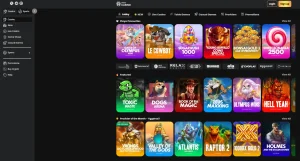


A game title, provider attribution and casino availability are separate claims, so each needs checking with the operator.
Quickspin Slots in the UK: What You Can Verify Before Playing
A game’s name and a casino’s logo do not, by themselves, establish who made the slot or whether it is currently available to you. If you are looking for Quickspin titles, treat the provider name, the individual game and the casino listing as separate details to check. A result that mentions one does not automatically confirm the others.
Amatic provides a useful example of the kind of information that can be checked: the company holds a UK Gambling Commission remote software licence, recorded under account number 47992, with the licence active from 27 April 2017. That is evidence about Amatic’s position, not evidence about Quickspin.
For a Quickspin slot, begin with the game’s own information in the casino where you intend to play. Check that the title is identified as a Quickspin game and that the casino presents it as available to its UK customers. A provider name in a general article, an old review or a third-party catalogue does not establish that the game is still offered by a particular operator. Casino catalogues can differ, and a listing may become outdated.
If you’re looking for a Quickspin casino in the UK, payout speed is one practical detail to check. Use the notes below as a quick reference when considering your options.
1. BeOnBet
Payout speed: 1-3 business days You can use the listed payout speed of 1–3 business days as a reference when considering BeOnBet.
2. WinBeast
Payout speed: 1-3 business days WinBeast has a listed payout speed of 1–3 business days, giving you a timing detail to consider.
3. SpinFormula
Payout speed: 1-3 business days The listed payout speed for SpinFormula is 1–3 business days.
4. SlotoSport
Payout speed: 1-3 business days You can note SlotoSport’s listed payout speed of 1–3 business days when reviewing this option.
5. Chanze
Payout speed: 1-3 business days Chanze has a listed payout speed of 1–3 business days.
6. NightWin
Payout speed: 1-3 business days The listed payout speed for NightWin is 1–3 business days, a useful detail for your shortlist.
7. Britsino
Payout speed: 1-3 business days You can take Britsino’s listed payout speed of 1–3 business days into account.
8. Zombillion
Payout speed: 1-3 business days Zombillion’s listed payout speed is 1–3 business days.
9. Revery Play
Payout speed: 1-3 business days You can use Revery Play’s listed payout speed of 1–3 business days as a point of reference.
10. Dieselwin
Payout speed: 1-3 business days Dieselwin has a listed payout speed of 1–3 business days.
You can also check the operator against the Gambling Commission’s public register. The UK Gambling Commission regulates remote gambling offered to consumers in Great Britain, and operators serving that market must hold the relevant licence even if their equipment or business is based elsewhere. The register can help establish whether the casino itself is authorised. It does not, on its own, confirm that a named game is in the casino’s current catalogue.
Keep those checks separate. A valid operator licence is not a catalogue entry; a catalogue entry is not proof of a particular game’s provider; and a provider’s presence in one casino does not establish availability across other casinos. These distinctions are more useful than a broad claim that a site “has Quickspin”, especially when you are deciding whether a specific title is playable.
The wording around provider licensing also deserves care. A software licence relates to the supplier’s permission to provide gambling software; it is not the same thing as the operating licence required by a casino that accepts customers. Amatic’s UK licence illustrates the first category. It does not make Amatic a casino, and it says nothing about Quickspin’s licensing status. Avoid treating a supplier name or licence reference as a substitute for checking the operator that would serve you.
If a casino advertises Quickspin games, look for a current, identifiable listing within that operator’s own site or game lobby. Match the provider label to the title you want, rather than assuming every game shown under a broad category comes from the same studio. If the listing is ambiguous, the operator is the relevant place to seek clarification about whether that title is available to its UK customers. A casino’s answer should concern the named game, not merely confirm that it carries software from a provider in general.
Amatic Slots in UK Casinos: How the Games Work · Wazdan Casinos in the UK: What Can Be Verified
Be cautious with claims that move from one market or website to another. A game listed on an overseas site, in an old review or in a general provider catalogue may not be available through a UK-licensed operator. Likewise, seeing a provider mentioned in a casino’s promotional material does not establish that every title from that provider is offered there. The practical check is specific: identify the title, confirm the provider label, and confirm its availability with the operator you are considering.
The same standard applies to searches for Quickspin slots online or for casinos carrying them. Those phrases describe what a player wants to find; they are not proof that any particular game or casino meets the description. Without a current, operator-specific listing and a way to verify the operator’s UK licence, a recommendation risks joining unrelated claims together.
In short, verify each link in the chain independently: the slot’s displayed provider, its presence in the casino’s current UK-facing catalogue, and the operator’s status on the Gambling Commission register. Amatic’s details demonstrate why evidence must stay attached to the company it actually describes. They cannot be used to identify Quickspin games or establish where those games can be played.
Game Features and Provider Claims
A slot’s feature list is a set of claims about how that particular game works. A provider’s name, a familiar theme or a casino description cannot establish those mechanics on its own. If a game is described as having free spins, expanding symbols or a bonus pick, treat each point as something to check against that title’s own rules.
Attention: A provider’s name or a familiar theme cannot establish game mechanics; always verify features against the specific title’s own rules.
This matters when comparing games from different suppliers. Similar labels can describe different mechanics, while a feature associated with one provider cannot simply be attributed to another. A “free-spin round”, for instance, tells you that spins may be awarded under particular conditions; the label alone does not explain how they are triggered, whether symbols change during the round or what ends it. Those details belong to the rules for the specific game.
Amatic offers a useful example of why descriptions need a provider and a game attached to them. Its slot catalogue includes video games with five reels and three rows, with fixed paylines numbering nine or ten. Some titles use scatter payouts and a free-spin feature in the “Book of” style. That is a description of Amatic formats, not a template for games from another supplier. It does not establish what a Quickspin title contains.
A careful description should make clear whether a statement applies to an entire catalogue, a particular title or only one version of that title. “The provider makes games with free spins” is broader than “this game awards free spins when a stated symbol combination appears”. The second claim can be checked against that game’s rules. The first may be accurate as a general description but does not tell you whether the specific slot you are considering has the feature.
Read the game’s own rules
Before relying on a feature claim, open the game’s information panel or rules and look for the relevant explanation. Check what triggers the feature, what happens after it begins and whether there are conditions that affect its outcome. A short lobby description can introduce a mechanic, but it may leave out the conditions that matter when you play.
Amatic Games at UK Online Casinos: What to Know · Amatic Slots at UK Online Casinos: What to Know
Pay attention to distinctions between a symbol and a feature. A scatter may pay or trigger an event under the game’s rules; its presence in the artwork does not prove what it does. Likewise, a “Book” theme does not by itself show that a slot has a book-style bonus round. Names and graphics can suggest a mechanic without defining it.
Promotional wording also deserves a closer look. Terms such as “bonus”, “wild” and “jackpot” can appear in many games, but they do not have one universal effect across all providers. A wild symbol might substitute for another symbol in a particular game, while a bonus label could refer to a separate round or another in-game event. The rules should explain the actual role rather than leaving it to the name.
When a description makes a specific promise, such as a feature being triggered by certain symbols, compare that promise with the game’s own instructions. If the wording is broad or unclear, do not fill the gap by assuming that a familiar mechanic works as it does in another slot. The safest interpretation is the one the game rules support.
Keep provider claims in scope
Claims about a provider should be no broader than the evidence behind them. A feature shown in one title does not prove that every game from the same supplier uses it. Nor does a catalogue-level description tell you which mechanics belong to a particular game. Those are different claims and need different support.
Do
- Check the game’s own rules for feature triggers
- Distinguish factual wording from promotional language
- Verify information tied to the specific title
Don’t
- Assume a feature in one title applies to all games from that provider
- Use a catalogue-level description to identify specific mechanics
- Use descriptions of other providers to establish a game’s features
The same discipline applies to Quickspin. A description of Amatic games cannot be used to establish Quickspin’s features, formats or mechanics. To assess a Quickspin game, look for information tied to that title and confirm that the rules shown in the game match the claim being made about it. If a casino page names a feature but the game’s own rules do not explain it, the description has not answered the important question.
You can also separate factual wording from promotional language. “Includes a free-spin round” is a claim about a feature; “exciting” is an opinion. “Pays in a particular way when a stated condition is met” is testable against the rules; “offers big wins” is not a clear explanation of how the game operates. Treating these statements differently makes it easier to see what you can actually verify.
No feature label guarantees a particular outcome. Rules describe how a game is designed to operate, not what will happen in an individual play. Read them for mechanics and conditions, not as a forecast. That distinction is particularly useful when a promotional description makes a game sound more predictable than its rules do.
How to Read Casino Availability Claims
A casino’s game catalogue and a software supplier’s business are not the same thing. A title appearing on a casino site means the operator offers that game; it does not mean the supplier runs a casino, takes your deposit or provides your account.
Amatic Industries illustrates the distinction. It is an Austrian business-to-business software supplier, not a consumer-facing casino. It holds a UK Gambling Commission remote software licence, which permits it to supply games to British operators. That is different from an operator’s UKGC licence to offer remote gambling to customers. A software licence is not an entry on the register of casinos where you can open an account and play.
Amatic Slots at UK Casinos: Rules, Bonuses and RTP
This matters when you encounter a purported list of casinos offering a particular provider’s games. A list may be an editorial snapshot, not a permanent catalogue or a regulatory register. Availability can depend on what an operator currently offers, so a name on a third-party page does not by itself establish that the relevant games are available there now. Nor does it prove that the operator is licensed to serve customers in Great Britain.
For Quickspin, those distinctions are useful, but Amatic’s arrangements cannot verify a Quickspin casino list. They do not establish which UK casinos carry Quickspin games, whether a particular title is currently available, or whether Quickspin operates a consumer-facing casino. Treat any list making those claims as something to check, not as confirmation. A provider name in a casino description is not enough to answer those separate questions.
For a UK player, the key regulatory check is the operator. Remote gambling businesses serving Great Britain must hold the relevant UKGC licence, regardless of where their equipment is located. The Gambling Commission’s Public Register is where you can check a business’s licensing status. A supplier’s licence or a casino’s claim that it carries a named provider does not replace that check.
Be alert to wording that blurs these roles. “Casino list” might mean a list of operators said to carry a provider’s games; it does not necessarily mean a list published or endorsed by the provider. “Licensed provider” may refer to permission to supply software, not permission to accept your bets. And “live casino” can suggest a casino product or a live-dealer service, neither of which can be inferred simply from a software name.
Amatic demonstrates that a licensed software supplier can distribute games to licensed operators without being a consumer-facing casino itself.
The responsible conclusion is narrow: Amatic demonstrates that a licensed supplier can distribute games to licensed operators without being a casino itself. It does not tell you which Quickspin games or casinos are available in the UK. For any named operator, confirm its current UKGC status and check its own catalogue for the specific provider or title. A list is only as useful as its date, scope and evidence—and the word “complete” does not supply any of those things.
Real-Money Play, Mobile Access and Free-Play Claims
A slot appearing in a search result does not establish that you can play it for money, on a phone or in demo mode. Those are separate claims about a particular game and the casino offering it. Quickspin’s name alone cannot confirm how a title is delivered or what play modes are available.
For real-money play in Great Britain, the casino operator is the key party to identify. The UK Gambling Commission regulates remote gambling offered to consumers there, even when the equipment used to provide it is located elsewhere. It issues operating licences to businesses and personal licences to individuals; a supplier’s name or a game’s branding is not an operating licence for the casino.
Before depositing, look for the operator’s identity and UKGC licence details, then check the business against the Commission’s register. The licence should belong to the casino business providing the account, not merely to a software company whose games it says it carries. This distinction matters because the Commission regulates gambling activity, including online casinos, while a game provider’s involvement does not by itself show that a particular casino is authorised to take your bets.
Endorphina Slots at UK Casinos: Availability Explained
Mobile access also needs a title-specific check. A casino website may work on a phone without every game in its catalogue being available or behaving identically there. Look for the game in the operator’s own mobile lobby and open it on the device you intend to use. A general statement that a provider makes mobile-compatible games would not establish that a particular Quickspin title is available in a particular UK casino. Nor should a delivery method associated with another provider be treated as evidence about Quickspin.
Free play is a separate question from mobile access and real-money availability. A demo version may be offered for one title but not another, and a game page or search result may not tell you whether the casino currently provides a playable demo. Check the operator’s own listing for a clearly labelled practice or demo option before assuming that a game can be tried without staking money. If no such option is shown, do not treat promotional wording or a preview as proof of playable free mode.
The same care applies when a page combines Quickspin games with real-money play, mobile access, free spins or a bonus code. Those phrases do not establish that the offer applies to a specific title, that it is available to your account, or that the casino is licensed for Great Britain. Confirm the operator and the game directly before acting on a claim; read any offer’s conditions on the operator’s site rather than relying on a short listing.
Verify Play Conditions
- Identify the operator’s identity and UKGC licence details
- Check the business against the Gambling Commission’s register
- Locate the game in the operator’s own mobile lobby for device compatibility
- Verify the availability of a clearly labelled practice or demo option
These checks are not interchangeable. A UKGC-licensed operator may provide remote gambling, but that does not confirm a particular game’s mobile or demo availability. A mobile-compatible game, in turn, says nothing about whether the site taking a real-money bet has the required operating licence. Keep the game, play mode and operator distinct when assessing what is actually being offered.
Deposits, Bonuses and UK Player Protections
A casino’s bonus is an offer from the operator, not a feature supplied by a slot provider. That distinction matters when you are looking for a no-deposit promotion or a first-deposit deal associated with Quickspin games: the operator sets the offer, decides which games qualify and applies the terms. A game provider’s name in a promotion does not, by itself, establish that the offer is available, current or suitable for every player.
For real-money play in Great Britain, the operator must hold a UKGC licence. The Gambling Commission regulates remote gambling offered to consumers in Great Britain, including when the operator’s key equipment is located elsewhere. A casino’s own wording about an offer does not replace that regulatory requirement. You can check the operator’s licence on the Commission’s Public Register before opening an account or depositing.
What a bonus term means in practice
The most important figure in a bonus offer may be its wagering requirement: the amount of play required before bonus funds or related winnings can be withdrawn. The UK Gambling Commission’s cap limits wagering requirements on bonus funds to ten times the bonus amount. That rule took effect on 19 December 2025. It does not mean every promotion has no wagering requirement, nor does it make a bonus automatically worthwhile. Read the offer’s terms to see what must be played through and which games count.
Barcrest Online Casinos in the UK: What to Verify
“No deposit” describes how an offer is accessed, not whether it is free of conditions. An operator may attach eligibility rules, expiry conditions or restrictions on withdrawals. A first-deposit promotion can also depend on the amount you deposit and how you claim it. Check the terms shown by the casino itself before accepting an offer; a headline does not tell you the full conditions.
Those details should not be inferred from the provider’s name. If a casino advertises a deal alongside Quickspin titles, confirm that the named games qualify and that the offer is still available to you. A promotion described as new or latest can change, so rely on the operator’s live terms rather than an old listing.
Deposits and account safeguards
Before your first deposit, a UKGC-licensed operator must prompt you to set a financial limit. This gives you a chance to decide in advance how much you are prepared to spend. If you later lower that limit, the operator must apply the reduction immediately. A request to increase a limit is not the same as a reduction and should not be treated as an instant change.
Remote gambling operators must also verify a customer’s identity and age before allowing deposits. Credit cards cannot be used to fund remote gambling, including through an e-wallet topped up with a credit card. These rules apply to the operator and its account process; a bonus does not suspend them. If a site presents a deposit method or offer in a way that seems to bypass these safeguards, pause before paying.
Regulatory Risk
Offshore "non-GamStop" operators do not hold a UKGC licence and sit outside the UK regulatory system, meaning consumer protections do not extend to them.
A low minimum deposit is not the same as a low-risk offer. Check the operator’s own cashier and promotion terms for the amount required, any payment restrictions and what happens if you withdraw before meeting the bonus conditions. Do not assume a figure mentioned in an older promotion still applies.
GamStop and non-GamStop claims
GamStop has been a required self-exclusion option for every online operator licensed in Great Britain since 31 March 2020. It allows customers to exclude themselves from participating licensed gambling sites. A site marketed as “non-GamStop” is not thereby an alternative UK-licensed casino: offshore operators do not hold a UKGC licence and sit outside the UK regulatory system.
That difference has practical consequences. UKGC consumer protections and regulatory routes do not extend to an offshore casino merely because it accepts UK customers or advertises Quickspin games. Do not treat a non-GamStop claim as evidence of a special bonus or a safer way to play. If you have chosen to self-exclude, looking for another route to gamble is not a sound response; use the support options available through the relevant scheme.
The useful check is therefore not whether a promotion uses a provider’s name, but who is offering it and under what terms. Confirm the casino’s UKGC licence, read the current bonus conditions and consider the account limits before depositing. A provider label cannot substitute for any of those checks.
RTP, Stakes and the Limits of Slot Comparisons
Return to player, or RTP, is a theoretical measure of the share of stakes a slot is designed to return over extensive play. It is not a forecast of what you will receive in a session, nor a promise that a particular stake will produce a particular payout. A high RTP figure can help compare stated game settings, but it cannot identify a likely winner.
iSoftBet Online Casinos in the UK: What to Check
The version matters. A specialist review reports that Amatic’s The Book of Aztec has RTP versions of 90.57% and 97.63%. That is an example concerning an Amatic title, not evidence about Quickspin games. The review also reports that the same Amatic game may be offered with different RTP versions by different casino operators. Because a reported setting can change, check the game information displayed by the operator you are considering rather than treating a figure in a review as current or universal.
That distinction is important when comparing games described as having the highest RTP. A provider-wide average, even if available, would not tell you the setting attached to an individual title at a particular casino. Nor does a high RTP establish that a game has low volatility. Volatility describes the pattern of payouts: a more volatile game can produce less frequent wins, while RTP concerns the theoretical return across a large number of plays. Neither measure predicts your results.
Maximum-win claims and progressive jackpots answer different questions again. A maximum win is a stated ceiling, not an expected outcome; a progressive jackpot changes as contributions accrue under the game’s rules. Neither figure substitutes for checking the RTP version, and neither supports a ranking of Quickspin slots without reliable, title-specific information. Popularity is no guide to RTP either.
Your stake is also bounded by UK rules. For online slots, the maximum stake per game cycle is £5 for players aged 25 and over, effective from 9 April 2025. For players aged 18 to 24, the cap is £2 per game cycle, effective from 21 May 2025. The game cycle is the individual round of play; a slot’s advertised maximum payout does not change the applicable stake cap.
UK Stake Caps
For online slots, the maximum stake per game cycle is £5 for players aged 25 and over (effective 9 April 2025), and £2 for players aged 18 to 24 (effective 21 May 2025).
These limits make comparisons more practical, but not more predictive. A published RTP is a game setting, while the stake cap sets the maximum permitted amount for each cycle according to age. When assessing any claim about a Quickspin title’s RTP, volatility, jackpot or maximum win, look for the specific game and the casino’s displayed rules. Do not treat figures for another provider’s game as a proxy.
What Casino Software Claims Do—and Don’t—Tell You
A casino’s software supplier and the casino itself are different businesses. The supplier develops or provides games; the operator presents them to customers as part of a gambling service. A reference to “casino software” therefore does not, by itself, identify who runs the casino or establish that a particular provider’s games are available there.
Amatic Industries GmbH illustrates the distinction. It is an Austrian business-to-business software supplier, founded in 1993, rather than a consumer-facing casino. It holds a UK Gambling Software (Remote) licence under account number 47992, active since 27 April 2017. That is a licence for the supplier’s role in the industry; it should not be read as evidence that Amatic accepts customers or operates a casino.
Amatic’s games reach UKGC-licensed operators through direct integrations or aggregator feeds. An aggregator is an intermediary that can connect a supplier’s games to casino platforms. This describes a route by which software may be supplied, not a promise that every operator carries every title. Nor does the supplier’s licence turn its software into a casino service for players.
Amatic Slots in UK Casinos: Games and Paylines
That distinction matters when assessing claims about Quickspin casino software in the UK. A page describing a casino as using a provider’s software is making a claim about the relationship between businesses. It does not establish who owns or operates the casino, what licence the operator holds, or whether a specific game can currently be accessed there. Those are separate matters to verify with the operator and the UK Gambling Commission’s register.
The same caution applies to labels such as “Quickspin gaming software” or “Quickspin casino software review”. A software description may tell you which supplier is associated with a product, but it cannot substitute for information about the casino offering it. And a supplier’s name appearing in a casino context does not mean the supplier itself is a place to deposit money or play.
Amatic provides a concrete example of why the wording matters: its UK software licence belongs to a business that supplies games to operators, while its distribution is through operator integrations or intermediary feeds. That example explains the difference between supplier and casino; it does not establish Quickspin’s licensing, corporate structure, distribution arrangements or UK casino availability. For Quickspin, those points need evidence specific to Quickspin and the operator concerned.
Finding Provider Games in a Casino Lobby
A provider’s name in a casino lobby can tell you that the operator is presenting games under that label. It does not, by itself, establish that every title is available to every customer, or that the provider operates the casino. For Amatic, games can reach UKGC-licensed operators through a direct connection or through an aggregator, which supplies games from multiple providers. The route can affect what appears in an individual lobby.
Verify Game Availability
Check Provider List
Look for the provider in the casino’s games or software directory before depositing.
Search the Lobby
Search the casino lobby specifically for the title you want to play.
Contact Support
If the provider list is not easy to find, ask customer support to confirm if the game is currently offered.
That distinction matters when you are looking for a particular provider’s slots. A casino may carry some of its games without showing the full catalogue, and availability can change. A lobby search is a useful first check, but it is not a reliable promise that a named game will be there when you open an account or return later.
For Amatic, a specialist review advises checking the operator’s current provider list before depositing, because individual availability was not confirmed. Treat that as a practical check rather than a permanent catalogue: look for the provider in the casino’s games or software directory, then search the lobby for the title you want. If the operator does not make its provider list easy to find, ask customer support to confirm whether the game is currently offered.
A lobby entry is also not a Gambling Commission register entry. The register records licensed businesses and their permissions; an operator’s game directory is a catalogue of what it says it offers. Amatic’s presence in a lobby therefore does not mean Amatic is itself the consumer-facing casino, nor does a provider listing establish the operator’s licence status. Those are separate checks.
Amatic Games at UK Casinos: How They Work
The same care applies to Quickspin. Amatic’s distribution arrangements cannot establish how Quickspin titles reach UK casino lobbies, which operators currently carry them, or whether a particular Quickspin game is available. A casino listing that mentions Quickspin is a lead to verify with that operator, not confirmation of every title or a guarantee of continued access. Check the operator’s current games information, and get confirmation from support if the exact game matters to your choice.
This approach avoids treating a provider label as more than it is. The lobby tells you what the casino presents at that moment; the operator is the place to confirm availability.
Who Takes Your Bet and Handles Your Account?
A slot provider and a casino operator have different jobs. The provider makes or supplies games; the operator offers the gambling account and is responsible for the player-facing services around it. Confusing the two can leave you looking to the wrong business when a payment, bonus or account query needs attention.
Amatic Slots at UK Online Casinos: How They Work
Amatic Industries illustrates the distinction. It does not take bets from British players directly. Instead, the casino operator holds the relevant licence and handles deposits, payouts, bonus terms and customer support. Amatic’s online gaming division, AMANET, was launched around 2010; that is a supplier-side development, not the launch of a consumer-facing casino.
The same distinction matters when you are assessing a Quickspin casino provider or software provider claim. A game’s provider is not necessarily the company that accepts your registration or holds your balance. The name attached to a slot can tell you who supplied the game, but it does not, by itself, identify who is accountable for your casino account.
For any real-money casino serving Great Britain, the operator must hold a UKGC licence. Before you deposit, identify the company named as the operator in the casino’s terms and check that it is the licensed business you intend to use. The provider’s name is not a substitute for that check.
Amatic Slots in UK Online Casinos: Games and Rules
This also helps make sense of a casino review. A review of Quickspin games concerns the software or titles being discussed; a review of the casino concerns the operator, its account conditions and its service to customers. Those are related subjects, but they are not interchangeable. A positive comment about a provider does not establish how a particular casino handles withdrawals or support.
The same care applies to mobile play and live casino wording. A provider label alone does not tell you which account you need, which operator is responsible for a session, or whether a particular product is available through that operator. Check the casino’s own terms and help information for the business handling your account. If you need assistance with a deposit, payout, bonus or account access, the operator—not the game supplier—is the relevant first point of contact.
That division is useful when comparing casino and provider claims, but Amatic’s business arrangements should not be treated as evidence about Quickspin’s corporate structure or distribution. Identify the operator behind the account rather than inferring responsibility from the game’s branding.
Are Amatic slots covered by GamStop self-exclusion?
Yes, when you play through a UK-licensed operator. GamStop has been mandatory for all Great Britain-licensed online operators since 31 March 2020, so self-exclusion applies at the operator level rather than to an individual slot.
Do Amatic casinos on GamStop have self-exclusion options?
Yes. UK-licensed operators must participate in GamStop, which lets you self-exclude from their online gambling services.
What is the new UK slots stake limit and how does it affect Amatic games?
The limit is £5 per game cycle for players aged 25 and over, and £2 for players aged 18 to 24. These limits apply to online slots, including Amatic games, at UK-licensed operators.
Can I get free spins on Amatic slots at UK casinos?
Yes, Amatic slots commonly include a free-spin round as a game feature. Whether a casino also offers promotional free spins for a particular Amatic title depends on that operator’s offer.
Material created by the team WSM