

A licence confirms authorisation for real-money gambling in Great Britain, but does not guarantee service quality or settle every choice.
What a UK Gambling Commission Licence Actually Tells You
A UKGC Licence is a basic test of whether a remote casino is authorised to serve customers in Great Britain. It is not a badge saying that every part of the service is excellent, or that problems cannot arise. The distinction matters: a licence tells you something important about the operator’s regulatory status, but it does not settle every question you might have before choosing where to play.
The UK Gambling Commission regulates remote gambling offered to consumers in Great Britain. Any operator providing real-money gambling to customers in England, Scotland or Wales must hold the relevant licence, whether the business is based in Britain or elsewhere. Moving a company’s headquarters overseas does not remove this requirement when it offers gambling facilities to people in Great Britain.
That makes licensing a threshold check, not a ranking system. If you are looking for a trusted online casino in the UK, the first question is whether the operator has the required UKGC Licence for the service it provides. Without that authorisation, a site is not a legal online casino serving the British market. With it, you have evidence that the operator is within the regulator’s framework. Neither answer, on its own, tells you whether the site will suit you or deliver a faultless experience.
When choosing a trusted UK casino in 2026, it helps to consider how long withdrawals may take. Use the details below as a starting point when deciding which options to explore.
1. BeOnBet
Payout speed: 1-3 business days BeOnBet lists a payout speed of 1–3 business days. This gives you a stated timeframe to consider when planning withdrawals.
2. WinBeast
Payout speed: 1-3 business days WinBeast lists a payout speed of 1–3 business days. You can use this stated timeframe as one factor when assessing the operator.
3. SpinFormula
Payout speed: 1-3 business days SpinFormula lists a payout speed of 1–3 business days. This offers you a clear stated timeframe for payouts.
4. SlotoSport
Payout speed: 1-3 business days SlotoSport lists a payout speed of 1–3 business days. Keep this timeframe in mind when considering how soon you may receive a payout.
5. Chanze
Payout speed: 1-3 business days Chanze lists a payout speed of 1–3 business days. You have a stated timeframe to factor into your choice.
6. NightWin
Payout speed: 1-3 business days NightWin lists a payout speed of 1–3 business days. This gives you a stated timeframe to refer to when considering withdrawals.
7. Britsino
Payout speed: 1-3 business days Britsino lists a payout speed of 1–3 business days. You can take this timeframe into account when deciding whether it suits your expectations.
8. Zombillion
Payout speed: 1-3 business days Zombillion lists a payout speed of 1–3 business days. This is the stated payout timeframe available for you to consider.
9. Revery Play
Payout speed: 1-3 business days Revery Play lists a payout speed of 1–3 business days. You can use this stated timeframe as a practical point of reference.
10. Dieselwin
Payout speed: 1-3 business days Dieselwin lists a payout speed of 1–3 business days. Consider this stated timeframe when weighing the operator as an option.
A licence also should not be treated as a blanket approval of every claim a casino makes. It does not mean that every promotion is attractive, that every feature will work as expected, or that every customer interaction will be handled perfectly. Those are separate matters. A regulated operator can still make mistakes, and a customer can still find that a service’s terms or design are not right for them. Trust begins with knowing who is subject to the rules; it does not end there.
The practical value of the licence is accountability. A remote operator serving Great Britain is not simply making a private promise about how it will behave. It operates under the regulator’s requirements for this market. That gives the licence more substance than a label on a homepage: the relevant point is whether the operator is authorised to offer the gambling service to customers here.
Be careful, though, about what you infer from a logo or a line of text. Seeing the words “licensed” or “regulated” is not itself proof that the relevant operator holds the correct permission. Nor does a general claim about a company necessarily establish that the particular casino service you are considering is covered. The claim and the legal position are not the same thing.
The phrase “most trusted online casinos” can suggest that a licence distinguishes one site as safer or more dependable than another. It does not do that by itself. Licensing establishes a regulatory baseline for operators serving Great Britain; it is not a consumer award, an endorsement of a casino’s overall quality, or a guarantee against dissatisfaction. A casino can meet the legal threshold and still deserve careful scrutiny in other respects.
It is equally important not to treat licensing as a promise that nothing can go wrong. Regulation reduces the significance of relying only on an operator’s own assurances, but it cannot make every decision or outcome favourable to a customer. A UKGC Licence should therefore carry real weight without being asked to carry more than it can: it indicates that the operator is authorised within the British regime, not that every aspect of the service has been individually certified as the best.
USA Casinos for UK Players: Licensing and Checks
For a trusted UK online casino, the licence is where a sensible assessment starts because it answers a foundational question: is this operator authorised to offer remote gambling to people in Great Britain? It cannot answer all the questions that follow. Keeping those conclusions separate avoids two common errors: dismissing regulation as mere decoration, or mistaking it for a guarantee.
The same principle applies whether a site describes itself as the best, the most reliable or simply a trusted casino online in the UK. Those descriptions are claims about reputation or experience. The licence is a regulatory fact about permission to operate. Treat the first as something to examine, and the second as a minimum legal check—not as a substitute for judgement.
Real-Money Play Starts With Verification and Limits
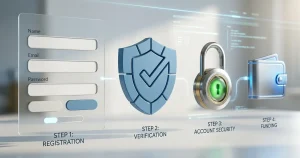
Before you can deposit or play for real money, the casino must verify you. This is a step to complete before wagering, not paperwork that can safely be left until you want to withdraw. A real-money account also involves setting controls on how much you can spend. Treat both tasks as part of opening the account, rather than obstacles to get past as quickly as possible.
Anjouan Casino Licence in the UK: What It Means
Have identity documents ready
Identity checks commonly involve a photo of your passport or driving licence and a recent utility bill. The identity document helps confirm who you are; the bill can help confirm your address. The casino may also ask questions about whether a payment method belongs to you. Make sure any images you submit are clear and that the details match the information on your account. If something does not match, contact the operator through its official support channel rather than trying different details.
Age verification is also required before an operator lets you deposit. If you are under 18, you cannot use a real-money casino account. Do not assume that being able to register, or receiving an account confirmation, means the checks are complete. The relevant point is whether the operator has verified you before allowing real-money play.
A trusted real-money casino should make its verification requirements understandable before you commit money. Read the account instructions and respond to requests through the casino’s own website or app. Avoid sending identity documents to an address or contact supplied in an unexpected message until you have checked that it is an official channel. These documents contain sensitive information, so it is reasonable to ask what is needed and how to submit it securely.
Casino Safety: Licences, GamStop and Offshore Sites
Set a spending limit before depositing
New customers must be prompted to set a financial limit before their first deposit, and account-level controls must remain accessible. Use that opportunity to choose a boundary you can stick to. A limit is useful only if it reflects your own finances; it is not a prediction of what you will spend or a way to make gambling risk-free.
Check which controls are available in the account and what each one limits. Keep the setting in place rather than increasing it in response to a run of losses or a desire to continue playing. Reductions take effect straight away, while increases are subject to a cooling-off delay. That difference gives you a way to cut back promptly while making it harder to raise your limit impulsively.
If the account does not clearly show where to find its controls, ask customer support before depositing. You should be able to access the account-level limit tools without relying on a promotion or a special offer. The same practical test applies whether you are comparing trusted online casinos for real money or deciding whether to use an account you have already opened: can you understand the controls, set a limit and find it again?
Do
- Set a financial limit before your first deposit
- Use official support channels for identity issues
- Keep account controls accessible
Don’t
- Increase limits to respond to a run of losses
- Send documents to unexpected message contacts
- Assume registration means verification is complete
Expect checks at withdrawal too
Verification can be revisited when you request a withdrawal. A first withdrawal may require the operator to review documents, and a delay at that stage does not by itself explain whether the payment request has been approved or when funds will arrive. A specialist review reports that first-time withdrawals can incur an additional document-check delay of 12–24 hours; treat that as a reported estimate, not a fixed timetable for every account.
Check your account messages for any outstanding request and submit only the documents asked for. If a casino requests further proof, ask what is missing and whether the documents already provided were accepted. Keep a record of the request and the response. That makes it easier to follow up if the status is unclear.
Do not choose a casino solely because its welcome offer looks attractive. A bonus does not remove the need to pass verification, set a limit or understand withdrawal checks. Nor does a payment label, including a cryptocurrency name, answer those practical questions. Before putting money into an account, make sure you know how to control spending and how to resolve an identity or payment-ownership question.
If gambling is affecting your finances or wellbeing, use the account controls to stop or reduce play and seek support. The National Gambling Helpline is available around the clock on 0808 8020 133.
Check Who Is Behind a Casino Site
A casino’s brand name does not always tell you which company is responsible for the gambling service. To check the connection, look up the website domain in the UK Gambling Commission’s public register, then read the operator details attached to that entry. This can show whether a familiar-looking site is linked to a licensed business and whether the name on the page matches the company recorded by the regulator.
Trusted Casinos Not on GamStop UK: What to Check
A specialist casino review citing the register reports that 333casino.com is listed as a White Label domain connected to Grace Media (Gibraltar) Limited, under account number 57869. The important detail is the relationship between the domain and the operator: the domain is not presented in the register as an independent operator entry, but as a site associated with the named company.
“White Label” describes a domain arrangement in which a casino brand or site is linked to an operator that holds the relevant account with the regulator. The label does not, by itself, tell you how well the site handles every customer interaction. Nor does seeing an operator’s name establish that every current claim made on the site is accurate. It gives you a specific company to investigate rather than leaving you with a brand name alone.
Register information can change, so treat a domain lookup as a check of the record at the time you consult it, not as a permanent endorsement. Confirm that you have entered the address of the site you intend to use; a similar brand name or a different web address may not have the same register entry. If the operator name is unclear, or the domain is absent from the record, do not assume that another site with a similar name has the same regulatory status.
The operator’s history matters too. On 26 June 2025, the Gambling Commission imposed a £60,000 financial penalty on Grace Media. The breaches involved self-exclusion and consent for direct electronic marketing. That is relevant context for a reader checking a domain linked to the company, but it should be described precisely: the penalty was imposed on Grace Media, not on a brand label in the abstract.
On 26 June 2025, the Gambling Commission imposed a £60,000 financial penalty on Grace Media for breaches involving self-exclusion and consent for direct electronic marketing.
This distinction cuts both ways. An operator’s presence in a public register is useful evidence about who stands behind a domain; it is not proof that the operator has never failed to meet its obligations. Equally, an enforcement action is a concrete part of the company’s record, but it does not establish that every service or customer interaction connected with it is identical. The point is to put the available information together, not to turn one register entry or one penalty into a sweeping verdict.
Casino review sites can help you find details to investigate, but their descriptions are not a substitute for the public record. If a review calls a site trusted, check whether it identifies the actual domain and operator, and whether those details agree with the register. A confident label without that connection leaves the central question unanswered.
The same approach applies when you see claims about trusted slots, bonuses or payment options. Those features may affect whether a site suits you, but they do not identify the company responsible for it. Start with the domain-to-operator link, then consider what the operator’s record says. A trust label is easy to print; a verifiable connection is more useful.
Trust Is a Check, Not a Promise of the Best Experience
A casino described as one of the most trusted may still be a poor fit for you. “Best” is a judgement, not a regulatory status, and a confident label does not tell you who operates the site, what controls are available or how its terms will affect your account. Treat it as a prompt to check, not as evidence that the work has already been done.
Non-UK-Registered Casinos: Licensing Explained
Start with the operator and its UKGC Licence. The name on a website can differ from the company responsible for it, so check that the domain and operating business match the public register. A licence is a useful baseline for a casino serving customers in Great Britain, but it does not promise that every interaction will be smooth or that you will like the service. Trust depends on checking the specific site and the arrangements you will actually use.
Account controls are another practical test. A casino should let you set financial limits and find those controls again without having to search through obscure menus. Look at whether you can reduce a limit promptly; reductions take effect immediately, while increases are subject to a cooling-off delay. That distinction matters when you want to act on a decision now rather than leave yourself exposed to an instant increase.
Consider how the site handles promotions, too. Customers must be given more control over the kinds of promotions they receive and the channels used to send them. A trusted service should make those choices understandable, rather than treating marketing as an unavoidable condition of having an account. Check the available settings and whether they let you choose what reaches you.
Trust Assessment
- Verify that the domain and operating business match the UKGC public register
- Ensure financial limits can be reduced promptly
- Check for clear controls over promotional messages and channels
- Distinguish between regulatory status and subjective quality claims
These checks do not establish that a casino will provide the most enjoyable games, the friendliest support or the quickest resolution to a problem. Those are separate questions, and a trust label cannot answer them for every customer. Nor does a game being offered by a casino tell you, by itself, whether the operator behind that site meets the standards you expect.
If you are comparing casinos, avoid turning “best” into a shortcut. Ask who is accountable for the site, whether its licence entry covers the domain you intend to use, and whether the account controls and communication preferences are clear. Then read the terms that apply to your own choices before accepting an offer or changing how you play. A polished homepage can make a claim look authoritative; a checkable operator and usable controls are more meaningful.
The aim is not to find a label that removes all uncertainty. It is to know what the label can and cannot tell you, and to make a decision based on the operator, the controls and the conditions in front of you—not an unqualified promise of the best experience.
Crypto Casinos Still Need a Great Britain Licence
A casino’s use of cryptocurrency does not change the regulatory test for serving customers in Great Britain. The relevant question is not which payment label appears on a site, but whether the business providing remote gambling holds the appropriate UKGC Licence for the activity it offers to people in this market.
That obligation applies even when the operator is based elsewhere. A company cannot avoid the Great Britain licensing requirement simply by locating its business overseas or presenting itself as a crypto casino. The payment method and the operator’s regulatory status are separate matters.
Non-UK-Regulated Casinos: Rules and Risks
This distinction matters when a site describes itself as trusted, secure or built around digital currencies. Those claims do not establish that it is authorised to offer real-money gambling to customers in Great Britain. Nor does a polished website, a wallet connection or a cryptocurrency logo answer who is legally responsible for the gambling service.
Before treating a crypto-branded casino as a trustworthy option, identify the company that runs the gambling operation and check whether it has the relevant UKGC Licence. The licence must relate to the business providing the service to customers here; a general statement that a company is regulated somewhere is not a substitute. If you cannot connect the site to an appropriately licensed operator, the branding alone should not reassure you.
This is not a claim that a particular coin or payment route is accepted at any casino. Payment availability can vary, and a casino’s use of crypto terminology does not tell you whether you can deposit or withdraw through a specific method. It also does not settle whether the operator is authorised for Great Britain. Treat those as distinct questions rather than allowing one to stand in for the other.
Curacao Casino Licence in the UK: What It Means
A search for a trusted crypto casino in the UK can make the payment feature seem like the central measure of reliability. It is not. The first trust check is whether the operator is entitled to provide remote gambling to customers in Great Britain, regardless of where that operator is based. Only after establishing that should you assess the service’s other features and conditions. “Crypto” describes a payment-related label; it does not confer regulatory status.
Great Britain and Northern Ireland Are Not the Same Regulatory Market
A casino described as “UK-facing” may sound as though one regulatory check settles its status everywhere in the country. It does not. The UK Gambling Commission’s remit for remote gambling covers services offered to consumers in Great Britain: England, Scotland and Wales. Northern Ireland is outside that remit for remote-gambling provision.
That distinction matters when you are assessing a site’s claim to be a trusted casino for the whole UK. A UKGC licence is relevant to the operator’s activities in Great Britain, but it does not, by itself, establish the regulatory position for customers in Northern Ireland. The word “UK” on a homepage, in an advert or in a review cannot widen the Commission’s jurisdiction.
Casinos Without a UK Licence: Rules and Risks
A register check should therefore be read for what it actually confirms. If an operator holds a UKGC licence, that is evidence of its position within the Commission’s Great Britain framework. It is not a general certificate covering every part of the United Kingdom, nor a substitute for checking which rules apply where you live. Treating a Great Britain licence as proof of a single UK-wide regime would collapse a legal distinction that remains important.
This does not mean that Northern Ireland has no gambling rules. It means that the UKGC is not the regulator responsible for remote-gambling provision there in the same way it is for Great Britain. The Gambling Act 2005 governs gambling in England, Wales and Scotland, while Northern Ireland has a separate legal framework. The two jurisdictions should not be described as though they were interchangeable.
For a customer, the practical question is not simply whether a casino uses the word “UK” or displays a licence reference. Consider where you are based and what the operator says about the market it serves. Then distinguish a claim about Great Britain from a claim that covers Northern Ireland. If the wording is vague, do not infer that one regulator’s approval applies across both.
Online Casinos With No Sister Sites: UK Guide
A responsible description of a trusted UK casino should be precise about this boundary. A UKGC Licence is a meaningful check for Great Britain, but the licence alone does not answer every jurisdictional question raised by the broader label “UK”. That is a narrower claim than some marketing language suggests—and a more useful one when you need to understand what a licence actually covers.
Read Reviews and Bonus Terms Separately
Casino reviews can help you identify points worth checking, but a favourable verdict is not proof that a site is trustworthy. Look for clear explanations of how the reviewer assessed the offer, whether the terms are discussed in full and whether the review is current. Treat confident claims about “trusted” casinos with care if they are not supported by details you can verify.
A review is a guide to questions, not a substitute for reading the casino’s own terms. A bonus can look generous while making its value conditional on how much you must stake, which games count and when the offer expires. Those rules can change, so check the terms attached to the offer you are considering rather than relying on a review’s summary.
Bonus Wagering
Step 1: Identify the bonus amount
Determine the bonus value, for example, £20.
Step 2: Check the wagering requirement
Find the multiplier, such as 10x wagering.
Step 3: Calculate total stakes
Multiply the bonus by the requirement (£20 × 10) to find the total stakes needed, which in this example is £200.
Wagering requirements describe the total amount you must stake before bonus-related winnings can be withdrawn, subject to the offer’s rules. A specialist review illustrates the calculation this way: a £20 bonus with 10x wagering requires £200 in total stakes. That figure is a worked example, not a promise about any particular offer. Check whether wagering applies to the bonus, the deposit, or both; the distinction can substantially alter the required play.
Expiry rules matter too. Specialist reviews describe bonus funds and free spins as commonly having a set validity period, with examples ranging from 7 to 30 days. The deadline for using free spins may differ from the time allowed to complete wagering. If you miss a stated deadline, the remaining bonus or related winnings may be forfeited, so find the expiry wording before opting in.
Game contribution is another term that can make a headline offer less straightforward. Specialist reviews describe slots as often counting in full towards wagering, while live tables and blackjack may count at a lower rate or not count at all. The casino’s own contribution table determines what applies. A game that contributes nothing may still be playable, but its stakes will not move the wagering requirement forward.
Also check whether the offer is limited to particular customers or payment methods, and whether accepting it changes withdrawal conditions. Do not assume that a review’s description covers every qualification. If the terms are unclear, the safer decision is to leave the promotion unclaimed rather than discover its conditions after playing. A review can help you compare the wording; only the terms applying to your account tell you what you are actually accepting.
Casino sites not registered with GamStop in the UK
A Casino App Does Not Change the Safety Checks
A casino app is an access route, not a separate trust standard. Before using one for real-money play, check the operator behind it and confirm that its UKGC Licence covers the service offered to customers in Great Britain. The same checks apply if you reach the casino through a browser: an app icon or a polished interface does not establish who is responsible for the account.
Make sure the app is connected to the operator’s stated service rather than assuming that a familiar name or logo is enough. Read the account terms and look for the controls available once you sign in. UK-licensed casinos must provide tools such as self-exclusion, and remote operators must make financial limits accessible at account level. Those protections matter whether you use a phone, tablet or computer.
Treat notifications as a separate decision. An app may ask to send promotional messages, but permission to receive them should not be confused with permission to use the casino. Casinos must give customers more control over the types of promotions they receive and the channels used to send them. Check the available choices rather than accepting every notification by default; you can decide whether promotional alerts are useful to you.
The practical test is whether you can identify the operator, verify its authorisation and find the account controls you need without relying on the app’s appearance. If a link in a notification takes you to a page whose operator or terms are unclear, pause and check the destination before signing in or sharing account details. A convenient shortcut is still a shortcut to the same business, with the same responsibilities and the same need for scrutiny.
Merkur Casino Online UK: Games and Site Operators
Bitcoin and Dogecoin Do Not Replace the Licence Check
A casino’s Bitcoin or Dogecoin branding tells you something about how it presents its payment options. It does not tell you whether the business is authorised to offer real-money gambling to customers in Great Britain. The same distinction matters whether you are considering a site promoted as a Bitcoin casino or one that highlights Dogecoin.
For remote gambling businesses serving Great Britain, the relevant UK Gambling Commission licence is required regardless of where the business is based. A cryptocurrency name, wallet symbol or payment description cannot stand in for that authorisation. Nor does it establish which company operates the site. Those are separate questions, and the coin label answers neither.
Treat claims about a trusted Bitcoin casino in the UK with the same care as any other trust claim. Look for the operator’s identity and confirm its regulatory position through the Gambling Commission’s public information before deciding whether to use the service. If a site makes its payment branding prominent but leaves the operating business or its licence unclear, that is a reason to pause, not evidence that the missing details are unimportant.
The same applies to Dogecoin. Seeing the coin named on a page does not, by itself, confirm that deposits or withdrawals are available in that currency, or explain the terms that would apply. Payment availability and the operator’s authority are distinct matters; one should not be inferred from the other.
There is no special exemption from the Great Britain licensing requirement because a site deals in cryptocurrency, accepts customers from abroad, or describes itself as international. The relevant issue is whether it offers remote gambling to consumers in Great Britain. A coin may be the headline feature, but it is not a regulatory credential.
Best offshore casino sites: what UK players should know
Live Tables and E-Wallets Have Different Terms and Timings
A live dealer table can count differently from a slot when you are working through a bonus. A specialist casino review reports that slots may contribute their full stake towards wagering, while live tables and blackjack can count for less or not count at all. Check the promotion’s game-contribution table before opting in: a game that is available to play may still make little or no progress towards the wagering requirement.
Payment eligibility is another separate condition. A specialist casino review notes that welcome deals can be restricted to new customers, limited to one per household and unavailable with some payment methods, including certain e-wallets. Do not assume that being able to deposit with an e-wallet makes that deposit eligible for a bonus. Deposit and withdrawal availability are separate, too, so check both before choosing a method.
Timing depends on the route and on the operator’s review of a withdrawal. A specialist casino review puts PayPal withdrawals at roughly four to six hours on weekdays, with a longer estimate of eight to ten hours from Friday to Sunday. Treat that as an indicative timing, not a promise: processing can depend on the operator and the particular transaction.
For debit cards, the same type of review gives a typical window of two to three banking days after the operator has reviewed the withdrawal. Bank transfers may also involve a charge set by your bank; the cited estimate is £2–£5, so check your own bank’s terms rather than assuming the casino sets that cost.
Before playing live tables with a bonus, compare the contribution rules with the withdrawal method you intend to use. The payment page and bonus terms answer different questions: one concerns how funds move, the other whether your play qualifies. A trusted live-table or e-wallet option is not defined by its label; the practical details are the applicable terms and the timing stated for that specific route.
Is 333 Casino licensed for Great Britain?
The UK Gambling Commission register links 333casino.com to Grace Media (Gibraltar) Limited, account 57869, as a White Label domain. Check the register entry for the relevant operator and service.
How can I check whether a casino is legal?
Check the UK Gambling Commission’s public register for the operator and the casino domain. A casino serving customers in Great Britain must have the relevant licence; a licence claim or logo alone is not proof.
Is LeoVegas legitimate and safe to bet with?
LeoVegas Gaming PLC is listed by the Gambling Commission under account 39198, and leovegas.co.uk is listed as its active UK-facing domain. That indicates regulatory authorisation, but a licence is not a guarantee that every part of the service will be problem-free.
Material created by the team WSM