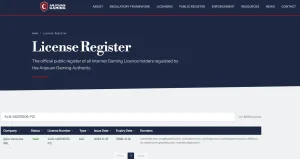


A licence names the operator’s stated jurisdiction; it does not show that the site has authorisation from the UK Gambling Commission.
What a Curacao-Licensed Casino Means for UK Players
A casino described as “Curacao-licensed” is referring to the jurisdiction under which its operator says it is licensed. The phrase identifies a licensing location; it does not, by itself, describe the rules that apply in Britain or show that the operator is overseen by the UK Gambling Commission.
That distinction matters because a gambling business can have a licence from one jurisdiction while offering its service in a different market. The place named on a licence and the place where customers live are separate things. A Curacao licence therefore tells you about the operator’s stated licensing jurisdiction, not that the site has UKGC authorisation.
The UK Gambling Commission regulates operators that serve customers in Great Britain. A non-UK-regulated casino, by definition, operates without the Commission’s oversight. Such sites are typically licensed by jurisdictions including Curacao, Malta, Gibraltar or Anjouan. These are different licensing jurisdictions, not alternative names for UK regulation.
Malta MGA Licence and Online Casinos in the UK
This is why “Curacao online casino” is not a complete description of a site’s status for a British customer. It may tell you where the operator says its licence comes from, but it does not answer whether the operator is regulated by the UKGC. Those are distinct questions, and one answer cannot be assumed from the other.
The same distinction applies when a casino presents itself as international or serves customers in several countries. A licence is connected to the authority and jurisdiction that issued it; the customers’ location is another matter. A site’s appearance, currency options or use of English does not change which regulator oversees it. Nor does the word “licensed” alone establish UK oversight.
For readers comparing Curacao casinos online, the useful starting point is to separate three ideas: the operator, its licensing jurisdiction and the market it serves. The operator is the business providing the gambling service. Its licensing jurisdiction is the place whose authority it says has licensed it. The market it serves concerns the customers it seeks to reach. Treating these as interchangeable can make a foreign licence sound like UK approval when it is not.
Casino Safety: Licences, GamStop and Offshore Sites
This distinction is not unique to Curacao. A non-UK-regulated casino may be licensed elsewhere, but the existence of a foreign licence does not place it under the UK Gambling Commission. Conversely, the fact that a company is based outside Britain does not, on its own, identify its regulatory status: the relevant issue is the regulator overseeing its gambling service, not merely the company’s address.
When a site uses “Curacao-licensed” as a prominent label, read it as a claim about licensing jurisdiction. Do not read it as a general assurance about every aspect of the service or as evidence that the UKGC supervises it. The label may be relevant to understanding who the operator says regulates it, but it does not settle what protections or rules apply to a player in Britain. Those details depend on the jurisdiction and the operator, rather than on the label alone.
This also helps explain why searches for a “best Curacao online casino” can obscure a more basic question. A comparison of sites may focus on games or presentation, but the phrase Curacao-licensed does not make the sites equivalent to UK-regulated casinos. Nor does it tell you whether any particular site is suitable for you. The country named in a licence is a starting point for understanding the arrangement, not a substitute for examining the operator’s status.
In short, Curacao describes a licensing jurisdiction, not a UK regulator. A casino licensed outside the UK is not overseen by the UK Gambling Commission simply because it accepts customers, uses familiar branding or describes itself as licensed. Keeping the operator’s licence location separate from the market it serves prevents a common misunderstanding: a foreign licence and UK approval are not the same thing.
Curacao Casino Licensing and the UK Legal Position
If you are considering a casino in the UK, check its licensing status and terms before you play. This list gives you a concise point of reference, but the details provided here do not establish any operator’s licence status.
1. BeOnBet
Payout speed: 1-3 business days BeOnBet lists a payout speed of 1–3 business days. The information provided does not specify its licensing status.
2. WinBeast
Payout speed: 1-3 business days WinBeast lists a payout speed of 1–3 business days. No licensing details are provided here.
3. SpinFormula
Payout speed: 1-3 business days SpinFormula lists a payout speed of 1–3 business days. Its licensing status is not stated in the available information.
4. SlotoSport
Payout speed: 1-3 business days SlotoSport lists a payout speed of 1–3 business days. The details provided do not confirm a licence.
5. Chanze
Payout speed: 1-3 business days Chanze lists a payout speed of 1–3 business days. No information about its licensing status is provided.
6. NightWin
Payout speed: 1-3 business days NightWin lists a payout speed of 1–3 business days. The available details do not state whether it holds a licence.
7. Britsino
Payout speed: 1-3 business days Britsino lists a payout speed of 1–3 business days. Its licensing status is not specified in the information provided.
8. Zombillion
Payout speed: 1-3 business days Zombillion lists a payout speed of 1–3 business days. No licence details are available here.
9. Revery Play
Payout speed: 1-3 business days Revery Play lists a payout speed of 1–3 business days. The information provided does not specify its licensing status.
10. Dieselwin
Payout speed: 1-3 business days Dieselwin lists a payout speed of 1–3 business days. No information about its licence is included.
A casino’s licence from Curaçao does not determine whether it is authorised to serve customers in Great Britain. The relevant question under British gambling law is whether the operator holds a licence from the UK Gambling Commission (UKGC). That requirement applies to operators serving the market whether they are based in Britain or operate from another country.
This distinction matters when a site describes itself as a Curaçao-licensed casino. Its overseas licence relates to the jurisdiction that issued it; it is not a substitute for UKGC authorisation. A company cannot meet the British licensing requirement simply by holding a licence elsewhere. Equally, the location of its offices does not remove the requirement if it supplies gambling services to customers in Great Britain.
The Gambling Act 2005 is directed at operators supplying gambling services into the market, rather than at individual customers. In practical terms, the legal obligation to obtain the relevant British licence rests with the business offering the service. A foreign licence may describe the operator’s regulatory position in another jurisdiction, but it does not alter the rule that applies to an operator serving Great Britain.
Legal Requirement
A foreign licence does not satisfy the requirement for an operator to hold a licence from the UK Gambling Commission when serving the British market.
That does not mean the law expressly makes it a crime for a British citizen to use a gambling service licensed in another country. The legal distinction is between the operator’s duty to hold the required permission when serving the British market and the position of a person who uses an overseas service. The Act’s focus on operators should not be recast as a blanket criminal prohibition on players.
There is a further distinction between what a site accepts and what it is authorised to do. A Curacao casino may make its website accessible to someone in Britain, or allow that person to register, but accessibility alone does not establish that the operator has the permission required to serve Great Britain. Nor does an overseas licence confer UKGC status by implication. The label “licensed” needs to be read with the jurisdiction attached to it.
For readers comparing claims about a Curacao casino licence in the UK, the central legal point is therefore straightforward: a licence issued outside Britain and authorisation to serve customers in Great Britain are different things. The operator’s base does not change the British requirement, and the foreign licence does not satisfy it. This is a question of the operator’s legal status in the market, not merely the name printed on a licence.
Online Casinos With No Sister Sites: UK Guide
The Gambling Act 2005 governs gambling in England, Wales and Scotland. The rule described here concerns operators serving customers in Great Britain; it should not be casually extended to every part of the UK as though the legal framework were identical. For a player, the fact that a site is open to visit is not the same as evidence that it is operating with the authorisation required for the British market.
In short, Curaçao licensing and UKGC licensing answer different questions. One identifies a licence issued by an overseas jurisdiction; the other is the permission required for an operator serving Great Britain. The first does not, by itself, establish the second.
How to Read a Casino Licence Without Mistaking It for UK Approval
A licence is permission from a particular authority under that jurisdiction’s rules. It does not become UK Gambling Commission authorisation simply because a casino accepts customers in Britain or displays a foreign licence badge. The issuing jurisdiction matters: a Curacao gaming licence and a UKGC operating licence are not interchangeable credentials.
A licence should be understood as evidence of oversight under a specific framework, not as a general assurance that every safeguard available under UK regulation applies.
The badge alone also tells you little about what the licence requires. Rules differ between jurisdictions, including requirements for testing games, auditing an operator and protecting customer funds. A licence should therefore be understood as evidence of oversight under a specific framework, not as a general assurance that every safeguard available under UK regulation applies.
Anjouan illustrates why the distinction matters. Its framework does not require casinos to have random number generator (RNG) testing, audits or segregated player funds. Segregation means keeping player balances separate from an operator’s own money. Without that requirement, a licence should not be read as a guarantee that customer funds are held apart.
The complaint process can differ too. The Anjouan authority does not handle, mediate or decide player complaints. Anjouan-licensed casinos also do not offer an independent dispute-resolution route comparable to services approved by the UKGC. That is a different arrangement from UK-regulated gambling, where approved alternative dispute resolution (ADR) is part of the regulatory framework.
These are details of the Anjouan system, not evidence about every other jurisdiction. A Curacao casino rating, for instance, cannot be inferred from the word “licensed” alone; nor should Anjouan’s rules be attributed to Curacao. The relevant question is what the named authority’s own framework actually requires.
For a reader, the practical point is to separate three things: the licence’s issuing authority, the protections its rules require, and whether the operator has UKGC authorisation. A foreign licence may indicate that an operator falls under another jurisdiction’s framework. It does not, by itself, establish that the operator meets UK requirements or that UK complaint routes apply.
Casinos Without a UK Licence: Rules and Risks
That distinction is easy to miss when a site presents a licence badge as a broad mark of trust. A licence is only as informative as the authority behind it and the obligations attached to it. A seal is not a summary of the rules.
Checking Licence Claims and Casino Names
A casino’s logo or footer is not enough to establish who holds its licence. The operator may trade under a brand name while the licence is recorded against a legal company name. Those names can differ, but the relationship should be clear: the site’s terms should identify the operating company, and the licence details should point to the same entity or explain the connection.
If the company named in the site’s terms does not match the name shown in a licensing record, pause before treating the claim as verified. A similar name is not proof that two businesses are the same. Check the exact spelling and any company details the register provides, then compare them with the operator’s own legal information. If the site gives no company name, or the record appears to belong to a different business, a badge alone cannot resolve the gap.
This matters when you encounter a list of casinos described as Curaçao-licensed. A list compiled by a review site can help you find names, but it is not the same as confirmation from the relevant licensing authority. Reviews may discuss games, payment options or customer service; none of those details establishes that a licence is current or belongs to the company running the casino. The same applies when a site advertises a particular slot or a payment method such as Paysafecard: those features say nothing about the identity or status of its licence holder.
Do
- Compare the operator’s stated company and licence information with the official authority’s records
- Check the exact spelling of the company name in the register
- Verify that the licence entry is still in date
Don’t
- Rely solely on a casino’s own badge or a third-party review list
- Assume a brand name is the same as the legal name on record
- Assume a “licensed casinos” page has been checked recently
For a Curaçao claim, compare the operator’s stated company and licence information with information published by the relevant authority, rather than relying solely on a casino’s own badge or a third-party list. Do not assume that a page listing “licensed casinos” has checked each entry recently. A licence claim can become out of date, and a brand name may not be the legal name on record. If you cannot establish a credible match, treat the claim as unconfirmed rather than filling in the blanks yourself.
Anjouan claims require particular care. Check the public register entry, the expiry date and the company name before relying on an Anjouan casino licence. The name on the record should correspond to the company identified by the casino, and the entry should still be in date. Anjouan’s framework also does not make that licence permission to serve every market: it excludes the United Kingdom and other restricted jurisdictions. A listing therefore cannot, by itself, settle whether a casino may serve customers in a particular place.
The licence jurisdiction also affects what the claim does and does not tell you. An Anjouan-licensed casino is not required to connect to GAMSTOP or offer an independent dispute process comparable to services approved by the UK Gambling Commission. Those points should not be assumed to apply identically to a Curaçao operator; nor does a Curaçao badge establish UK approval.
When reading casino reviews, look for specific, checkable details: the legal company name, the stated licensing authority, and a record that matches the operator. Be wary of confident labels without those particulars. “Licensed” is not a complete answer unless you can tell who is licensed, by whom, and whether the public record supports the claim.
Merkur Casino Online UK: Games and Site Operators
Can UK Players Use These Casinos?
A Curacao casino may allow someone in Britain to open an account or attempt to gamble, but that does not mean it is authorised to serve customers there. The distinction is between what a website permits in practice and what the operator is legally allowed to offer.
For customers in Great Britain, the operator needs a licence from the UK Gambling Commission even if its business is based overseas. A licence issued in Curaçao does not replace that requirement. So a site advertising itself as a Curacao casino for UK players may be accessible, but its willingness to accept a British customer is not evidence of permission to operate in the British market.
Access is not necessarily blocked simply because a site is outside the UK system. You may encounter a site that accepts registrations or payments from people in Britain. That practical access should not be mistaken for UK authorisation, and it does not change the operator’s obligations. The relevant question is not only whether you can reach the site, but whether the operator is licensed to provide gambling services to customers in Great Britain.
The legal position for the individual is different from the operator’s. British citizens are not expressly barred by UK law from using gambling services licensed overseas, and a player does not commit a criminal offence simply by gambling on a site that lacks a UK licence. That does not make the service lawful for the operator to supply in Great Britain, nor does it turn an overseas licence into UK approval.
Attention: The ability to visit a site or open an account does not establish that the operator has the legal permission required to serve customers in Great Britain.
This distinction matters when considering Curacao casinos that accept UK customers, including sites that advertise crypto gambling. A crypto option changes how money may be transferred; it does not alter the licensing position. If a non-UK-based online casino is taking customers in Great Britain, the operator’s location or preferred payment method does not remove the UK licensing requirement.
Before using an overseas service, check the law that applies where you live and consider the implications of gambling through an operator outside the UK regulatory system. The rules are not identical across every part of the UK: the Gambling Act 2005 applies in England, Wales and Scotland, but not Northern Ireland. Do not assume that a site’s terms, its willingness to accept your account, or its description of its licence settles your own position.
In practical terms, being able to visit a Curacao online casino from Britain answers only a question of access. It does not establish that the operator may legally serve Great Britain, and it should not be treated as a recommendation to play.
GamStop and Casinos Outside the Scheme
GamStop is the UK Gambling Commission’s self-exclusion scheme. A person who registers with it asks participating gambling operators to prevent them from using their accounts. That restriction does not extend to every gambling website on the internet. A casino operating outside the UK regulatory system is not included in GamStop, so the scheme does not block access to it.
Safe Online Casinos in the UK: Licence and Checks
This is why searches for Curacao casinos not on GamStop can lead to a misleading impression: being outside the scheme is not a special form of approval, nor does it mean that a site has been assessed as suitable for someone who has self-excluded. It means the operator is outside that particular UK protection. A Curacao-branded site may accept a visit or account registration, but GamStop itself cannot stop you from reaching it or choosing to gamble there.
That distinction matters most if you joined GamStop because gambling had become difficult to control. The scheme is designed to create a barrier across the operators it covers. A casino beyond that boundary may leave the barrier intact for participating sites while offering another place to gamble. Looking for a new Curacao casino outside GamStop, or a no-deposit or welcome offer, can therefore undermine the reason you self-excluded. The presence of a bonus does not change the site’s relationship to the scheme.
There is also a difference between a casino having its own account controls and being part of a coordinated self-exclusion system. A site might describe ways to limit or close an account, but those measures do not make it part of GamStop or extend GamStop’s restriction to that site. The protections available can differ between operators, and non-UK-regulated casinos may apply less demanding standards for responsible gambling and handling personal data than operators licensed by the UK Gambling Commission.
When you play outside the UK regulatory system, you also lose access to protections that come with that system. These include mandatory responsible-gambling tools and the UK’s Financial Ombudsman Service. If a control is absent, does not work as expected, or a dispute arises, you cannot assume that the same UK channels will be available to help. A site’s own customer support is not a substitute for those independent protections.
GamStop Limits
GamStop’s reach is limited to operators within its scheme, meaning it cannot prevent access to casinos operating outside the UK regulatory system.
For someone who has self-excluded, the practical question is not simply whether a Curacao casino is “signed up” to GamStop. It is whether using a site beyond the scheme would expose them to the gambling access they deliberately tried to restrict. If the answer may be yes, relying on GamStop alone is not enough to keep that site out of reach. Avoid treating an operator’s marketing language about player care as proof that it can enforce the exclusion you registered with.
If you are supporting someone else, it may help to understand that GamStop is not a universal internet block. A person can still encounter gambling services beyond its coverage, even after joining. That does not mean the scheme has failed at its stated role; it means its reach is limited to the operators within it. The gap can be important when someone is trying to avoid gambling, so the existence of accessible alternatives should be treated as a risk, not as a recommendation.
A casino’s country label, payment options or welcome promotion does not close that gap. Nor does the phrase “not on GamStop” tell you that an operator provides equivalent safeguards. It says only that the site is outside the UK self-exclusion scheme. If you have chosen self-exclusion, an operator beyond that scheme may not honour the restriction that applies across participating sites, and you should not expect GamStop to prevent access to it.
International Casinos for UK Players: What to Check
Casino Sites, Slots and Bonus Terms
A bonus is not simply extra money or spins. Its terms determine what you must do before winnings become withdrawable, which games count towards that requirement and when the offer expires. Read those conditions before opting in, whether you are considering a welcome offer or free spins attached to a particular slot.
Look for the wagering requirement and check what it applies to. A specialist review has reported offshore welcome bonuses with requirements of 35 times the bonus or more. The wording matters: a multiplier may apply to the bonus, the deposit and bonus together, or another stated amount. Do not assume that a large-looking bonus is valuable until you know which balance must be wagered and which games contribute.
The same care applies to free spins. A specialist review has reported requirements of 30 to 50 times the resulting winnings, alongside withdrawal caps of £5 to £50. These figures are not a promise that every offer uses those terms; they illustrate why the full conditions matter. Check whether winnings from spins are treated differently from cash bonuses, whether a cap limits the amount you can keep, and whether the spins are restricted to a named game.
For instance, Book of Dead and Starburst are examples of slot titles, not a claim that any particular casino carries them. If an offer names a game, confirm that the spins work on that title and whether winnings from it face a separate wagering rule. A casino’s general slots catalogue does not establish that a specific bonus applies across every game.
Examples of bonus constraints
A specialist review reported offshore welcome bonuses with wagering requirements of 35 times or more, while free spins may have requirements of 30 to 50 times the winnings and withdrawal caps between £5 and £50.
Expiry conditions can be just as consequential as wagering. A specialist review has described free-spin packages expiring within 24 to 72 hours. Check when that period starts, whether it applies to claiming or using the spins, and what happens to unused spins or winnings after the deadline. The operator’s current terms should take precedence over a summary elsewhere, and a change to an offer can make an older description unreliable.
Before accepting, read the conditions attached to the exact promotion, not only the headline. Check eligibility, the games included, the wagering calculation, any maximum cashout, and the expiry rules. Keep a copy of the terms shown when you opt in. If an important condition is unclear, treat that uncertainty as part of the offer’s cost rather than assuming the most favourable interpretation.
Crypto and Other Payment Options: What They Do—and Don’t—Guarantee
A casino that describes itself as Curacao-licensed may offer several ways to fund an account, but its payment menu does not prove that the licence claim is valid or that the site is authorised to serve customers in Great Britain. Treat the licence and the payment arrangements as separate things to check.
Non-UK-regulated casinos may take card payments, e-wallets, bank transfers and cryptocurrency. Some use payment processors other than the ones familiar from UK-licensed sites, so the company or service shown during checkout may not be the casino’s own name. Read the payment instructions before sending money, and check what currency and account details they specify.
Crypto can also change how a payment is funded. A cryptocurrency deposit may avoid the UK restriction on using credit cards to fund gambling, but that does not make the casino UK-licensed or confer the protections of a UK-regulated service. Nor does the availability of crypto establish that a particular Curacao-licensed crypto casino is properly licensed. A payment method is not a regulatory endorsement.
USA Casinos for UK Players: Licensing and Checks
A specialist review has reported that some sites may let customers add funds through a mobile bill or a prepaid balance. These are not options to assume will be available: payment arrangements can vary between operators and may change. Check the terms presented by the site rather than relying on a general description.
Most importantly, a deposit route is not a promise of a matching cash-out route. A casino might accept a particular card, wallet, bank transfer or cryptocurrency for deposits without offering that same route for withdrawals. The payment terms should explain how winnings can be requested and whether the operator requires another method. Do not deposit on the assumption that money can be returned through the channel used to put it in.
This distinction matters whether you are comparing a list of Curacao-licensed casinos or considering one site on its own. The payment options tell you how the operator says you can send funds; they do not settle questions about licence status, access to a payment provider, or the route available when you want to withdraw. Check the terms before depositing, and remember that you are responsible for understanding the local-law implications of using an overseas gambling service.
Skrill, Neteller and Withdrawals: Expect Delays and Limits
A casino’s payment page may mention Skrill, Neteller or Trustly, but that does not establish that a particular non-UK-regulated casino accepts the service for withdrawals. Payment options can vary by operator and account, so check the withdrawal terms before depositing. A method shown for adding funds may not be available for cashing out.
A payment method shown for adding funds to an account may not be available for cashing out winnings.
Published timing claims also conflict. Some descriptions of non-GamStop casinos put withdrawals at 24 hours to 5 business days, depending on the method; other accounts say a payout from a non-UK-regulated casino can take three or four weeks. These are not equivalent expectations, and there is no UK regulatory clock to require an operator to meet a stated processing time. Treat any advertised estimate as conditional, not as a firm deadline.
Read the cashier terms for the full sequence: any internal review, the time to process a request, and the transfer time after approval. Check whether the operator can ask for further identity or payment checks, and whether it gives a clear process for responding. A specialist review has reported cases in which operators sought notarised documents or a video call before releasing funds. That is a report about possible practice, not a standard requirement across casinos.
Limits can also affect how quickly a large balance reaches you. A specialist review has reported daily, weekly or monthly withdrawal caps at some non-UK-regulated casinos, which can mean taking a win in instalments. Confirm the applicable cap and whether it changes by payment method or account status before you rely on a displayed balance as money you can withdraw at once.
Keep copies of the cashier terms and any withdrawal confirmation. If a request is delayed, record when it was submitted and what explanation the operator gives. The practical point is not that Skrill, Neteller or Trustly is inherently faster: the casino’s rules, checks and payout limits can matter as much as the route named on its payment page.
Are Curacao Casinos Legit and Safe? The Protection Gaps to Check
A Curacao licence can indicate that an operator is licensed in that jurisdiction; it does not make the casino a UK-regulated service. Operators serving customers in Great Britain need a UK Gambling Commission licence, and a foreign licence is not a substitute. So “legitimate” needs a precise meaning: a licence claim may be genuine, while the operator still lacks UK authorisation and the protections that come with it.
Trustworthy online casinos in the UK: checks that matter
Safety also depends on what the operator must do when something goes wrong. Non-UK-regulated casinos may have weaker responsible-gambling and data-protection requirements than UK-licensed operators. Players can also lose access to UK safeguards, including mandatory gambling tools and the Financial Ombudsman Service. A complaint about a foreign operator is not something you can take to the UK Gambling Commission or a UK-approved alternative dispute resolution service simply because you are in Britain.
Player funds are another uncertainty. Anjouan-licensed casinos, specifically, are not required to keep player money separate from business funds; if an operator fails, players may rank as unsecured creditors. That is a serious exposure, but it is not evidence that every Curacao operator follows the same rules. The applicable protections depend on the actual licence and operator, and a licence alone does not settle whether funds are protected.
Complaint procedures can differ too. Under Anjouan’s framework, operators must reply to complaints within 30 calendar days, but the authority does not mediate or decide player disputes, and there is no independent route equivalent to UK-approved services. Again, those are Anjouan-specific facts, not a description of every Curacao casino.
A specialist review has reported cases in which offshore operators demanded notarised documents or video calls before releasing withdrawals. Treat that as a reported possibility, not a standard condition across Curacao sites. Demanding checks can leave you with little practical leverage if a dispute arises.
Before depositing, consider whether you could accept losing access to UK complaint channels and facing uncertainty over funds or withdrawals. Do not assume a foreign licence makes a casino safe for you; check the relevant local laws and understand the implications of using the service.
Are non-UK-regulated casinos legal for UK players to use?
UK law does not explicitly make it a crime for you to use an overseas gambling service, and players do not commit a criminal offence by gambling on an unlicensed site. The operator, however, needs a UK Gambling Commission licence to serve customers in Great Britain.
Are sites that are not on GamStop legal for players in the UK to access?
Not being on GamStop does not, by itself, make it a criminal offence for you to access or use a site. Operators serving customers in Great Britain still require a UK Gambling Commission licence.
Can I complain to the Anjouan regulator if a casino won’t pay me?
No. The Anjouan authority does not handle or decide player complaints, and Anjouan-licensed casinos do not have to offer an independent dispute process comparable to UKGC-approved services. Operators must respond to complaints within 30 calendar days.
What payment options are available at Non UK Casinos?
You may find credit cards, e-wallets, bank transfers and cryptocurrencies, as well as deposits charged to a mobile phone bill or taken from a prepaid balance. Available methods vary by casino.
Material created by the team WSM